








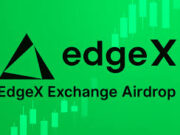









EdgeX Airdrop made waves in 2026 with a $195M token distribution. The event sparked sharp criticism across the crypto community. Fairness and transparency concerns quickly dominated the discourse.
Background: Understanding the EdgeX Platform
EdgeX is a decentralized perpetuals trading platform incubated by Amber Group, one of the most recognized crypto trading firms operating out of Asia. The project attracted serious institutional attention early on, pulling in backing from respected investors including Circle Ventures. Furthermore, EdgeX built an extensive points-based rewards program during its pre-launch phase, using it to incentivize early users with the promise of meaningful token allocations at launch.
Notably, the project allocated 25% of its total 1 billion token supply to the community, which works out to 250 million $EDGE tokens. On paper, this looked like a genuinely generous setup for early participants. In practice, however, the EdgeX Airdrop told a very different story once the tokens actually landed in wallets.
Source: BTCC Academy
The Numbers Behind the EdgeX Airdrop
To fully grasp the scale of what unfolded, it helps to look at the raw figures first. The EdgeX Airdrop distributed approximately $195 million worth of $EDGE tokens in total. Of the 1 billion total token supply, 250 million tokens were designated for the community.
However, on-chain analysts at Arkham Intelligence quickly flagged something alarming. Specifically, around 14% of the total supply, amounting to roughly 140 to 142 million tokens valued at approximately $94.6 million, went to wallets linked to “partners” and early liquidity providers rather than everyday community members. Moreover, analysts identified over 80 fresh wallets receiving disproportionate chunks of the allocation despite showing no meaningful history of trading activity on the platform. Consequently, the optics were damaging from the start.
Source: Binance Square
Community Backlash: What the Data Revealed
The reaction to the EdgeX Airdrop was immediate and intense. Users who had spent weeks building up trading points through genuine platform activity found themselves with far fewer tokens than anticipated. In contrast, wallets tied to insiders and partners walked away with enormous sums.
Additionally, reports from multiple outlets suggested that genuine community participants received as little as 4% of the intended airdrop share, despite the project’s prior commitments. What made the situation significantly worse was the inconsistency in how multipliers were applied across the distribution. Specifically, users with near-identical point balances received wildly different token amounts, with no clear explanation from the team.
Understandably, this triggered widespread accusations of favoritism, opaque tokenomics, and a fundamentally broken distribution model. As frustrations boiled over across social media platforms, EdgeX reportedly disabled comments on its X (formerly Twitter) account, a move that only amplified the backlash rather than containing it.
Source: MEXC News
On-Chain Analysis Puts Pressure on the Project
Third-party blockchain analytics played a central role in shaping the narrative around the EdgeX Airdrop. Arkham Intelligence released data showing concentrated token allocations across a limited number of wallet addresses. This painted a clear picture of centralization rather than the decentralized reward structure the community had been led to expect.
Meanwhile, community members cross-referenced their own point balances with actual token receipts and found the math simply did not add up. In addition, some participants pointed out that secondary market valuations for points earlier in the project’s lifecycle had set high expectations. For many of them, the actual EdgeX Airdrop tokens they received were worth a fraction of those earlier implied valuations.
That gap between expectation and reality created significant financial disappointment and, importantly, a rapid erosion of trust. Furthermore, the swift availability of on-chain data meant that the project had almost no time to shape the narrative before the community formed its own conclusions.
Source: CryptoRank
The Team Responds: Lockups and Buybacks
To its credit, the EdgeX team did not stay silent indefinitely. On April 1, 2026, the project announced a concrete response to the growing uproar over the EdgeX Airdrop. The team confirmed that the controversial 14% allocation linked to partner wallets would transfer to a one-year time-locked vesting contract.
Importantly, the lockup contract was audited by OpenZeppelin, a well-respected smart contract security firm, which added a layer of credibility to the announcement. Moreover, the project launched a token buyback program designed to support the market price of $EDGE and signal confidence in the token’s long-term prospects.
The initial circulating supply at launch sat at roughly 9.5% of the total token supply, which the team framed as a deliberate move to limit immediate sell pressure. Nevertheless, many community members remained skeptical, arguing that these corrective measures were reactive rather than a reflection of a project that had prioritized fairness from the beginning.
Source: OpenZeppelin
The Points System That Left Everyone Confused
One of the most frustrating dimensions of the EdgeX Airdrop experience centered on the points system itself. EdgeX had run a multi-month engagement campaign where users earned points based on trading volume, referrals, and various other platform activities. The expectation among participants was straightforward: more points meant more tokens.
However, the final distribution did not follow that logic at all. Instead, undisclosed multipliers dramatically altered outcomes, meaning two users with identical point balances could receive very different token amounts. This lack of predictability fundamentally undermined the entire premise of the points-based rewards program.
In turn, it raised difficult questions about whether the system was ever designed with fairness as its primary goal or whether it functioned mainly as a marketing mechanism to attract trading volume. Regardless of intent, the outcome damaged the credibility of the program and the platform that built it.
The Tokenomics Transparency Problem
The EdgeX Airdrop controversy does not exist in isolation. Rather, it sits within a larger pattern that has repeated itself across the crypto space over the past several years. Projects frequently announce community-friendly tokenomics during their promotional phases, then reveal at or after the token generation event (TGE) that insiders and partners received significantly more favorable treatment.
Notably, the crypto community has grown increasingly skilled at tracing wallet activity and verifying on-chain claims in real time. Tools like Arkham Intelligence, Nansen, and Dune Analytics give ordinary users the power to audit token distributions almost instantly after they occur. As a result, projects that attempt to obscure insider favoritism now face faster and more intense scrutiny than at any previous point in the industry’s history.
Furthermore, the speed of social media amplification means that on-chain findings spread across crypto Twitter, Telegram, and Discord within hours. Therefore, any project that assumes it can quietly shift tokens without community notice is operating on a fundamentally outdated assumption.
Source: KuCoin News
Price Impact: How the Market Reacted
The $EDGE token launched against the backdrop of all this controversy, and the market reflected the sentiment accordingly. Given the widespread negativity surrounding the EdgeX Airdrop, selling pressure emerged quickly after tokens reached recipients’ wallets. Many disappointed participants chose to sell immediately, contributing to sharp early price volatility.
Additionally, the revelation that a significant portion of the supply sat in wallets with the potential to sell at any time added to overall market uncertainty. Even with the 14% allocation now locked for a year, the remaining circulating supply still represented enough tokens to create meaningful downward pressure on price.
Traders and analysts watching from the sidelines treated the situation as a textbook example of how tokenomics design directly affects price stability in the critical days following a token launch. Consequently, the EdgeX situation became a widely cited cautionary reference in crypto discussion forums and trading communities.
Source: AInvest
Broader Implications for Decentralized Perpetuals
Beyond the specific case of the EdgeX Airdrop, this episode carries real implications for the decentralized perpetuals trading sector as a whole. Platforms competing in this space, including dYdX, GMX, and Hyperliquid, have all navigated community scrutiny around token distribution and governance at various stages. The EdgeX situation adds a significant data point to an ongoing conversation about how these platforms earn and sustain community trust.
Moreover, for perpetuals platforms specifically, liquidity depends entirely on an engaged community of active traders. Without that foundation, the platform’s core product suffers regardless of how sophisticated its technology is. Getting airdrop design right is therefore not just a public relations concern; it is a core business requirement with direct consequences for platform health and longevity.
Lessons Worth Taking Seriously
The EdgeX Airdrop saga delivers several important lessons for both project teams and participants across the crypto ecosystem. First, transparency in tokenomics is a baseline requirement, not an optional feature. Communities now have the technical tools to independently verify on-chain data, and any gap between what a project promises and what it delivers will surface quickly and publicly.
Second, points systems need clearly defined and publicly disclosed rules from day one. When multipliers, eligibility criteria, or allocation formulas remain hidden until after distribution, users feel deceived when the final figures appear. Third, the timing and structure of partner allocations matter enormously to community perception. Giving insiders a disproportionate share at the expense of genuine community participants is a reliable way to destroy months of goodwill overnight.
Finally, communication remains critical throughout a crisis. Disabling social media comments during intense community criticism is precisely the wrong move and almost always makes things worse. Projects that engage openly with criticism, even when the news is uncomfortable, recover their standing far more effectively than those that retreat into silence.
The Road to Rebuilding Credibility
Rebuilding credibility after an airdrop controversy takes consistent action over time, not a single press release. For EdgeX, the path forward extends well beyond a one-time lockup and buyback program. The project will need to demonstrate ongoing transparency in its governance processes, provide regular updates on vesting schedules, and create genuine opportunities for community input in future decisions.
Additionally, commissioning an independent retroactive audit of the points system would send a meaningful signal to the community. Acknowledging past shortcomings directly and openly tends to resonate far better with crypto communities than carefully worded statements that sidestep accountability. The EdgeX Airdrop experience, as damaging as it was, could ultimately become a turning point if the team approaches recovery with genuine transparency.
Closing Perspective
The EdgeX Airdrop story is ultimately about the tension between institutional necessity and community fairness in crypto. Projects need liquidity providers, institutional backing, and capital to scale effectively. At the same time, they depend on the goodwill and active participation of retail communities to build genuine decentralization and sustained organic usage.
When those two needs collide in the context of token distribution, the results can be explosive, as the EdgeX Airdrop demonstrated with remarkable clarity. Moving forward, both projects and the investors who back them should treat tokenomics transparency as a non-negotiable foundation. The crypto community’s growing ability to audit on-chain activity in real time means there is no longer any place to hide when distributions fail to match promises.
As the dust settles on this particular episode, the broader lesson stands firm: the EdgeX Airdrop may have distributed $195 million in tokens, but what it truly distributed was a much-needed lesson about accountability, fairness, and the rising expectations of crypto communities in 2026.
Sources and External Links
- Arkham Intelligence: https://platform.arkhamintelligence.com
- Binance Square: https://www.binance.com/en/square
- CryptoRank: https://cryptorank.io
- MEXC Learn: https://www.mexc.com/learn
- BTCC Academy: https://www.btcc.com/en-US/academy
- KuCoin News: https://www.kucoin.com/news
- OpenZeppelin: https://www.openzeppelin.com
- AInvest: https://ainvest.com
- Coingabbar: https://coingabbar.com