




















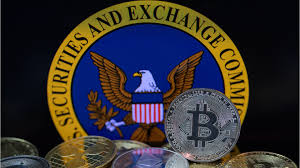
SEC has just reshaped how the United States approaches cryptocurrency regulation. On March 17, 2026, the agency joined forces with the CFTC to release a landmark interpretive guidance document. The release introduced a five-category token taxonomy that formally classifies most digital assets as non-securities. For an industry that has waited years for clear rules, this development is as significant as they come.
Years of Regulatory Uncertainty Finally Get an Answer
For most of its brief existence, the cryptocurrency industry in the United States operated without clear legal footing. Regulators pursued an enforcement-first philosophy, issuing subpoenas and filing lawsuits without offering concrete statutory guidance on what actually qualified as a security. Furthermore, the debate over whether assets like Ether and XRP fell under securities law dragged on through federal courtrooms and congressional hearings for years, leaving developers, investors, and exchanges in a perpetual holding pattern.
Institutional investors, meanwhile, kept their distance. Pension funds, asset managers, and large trading desks saw regulatory risk as a barrier too significant to ignore. Additionally, global competitors in jurisdictions like the European Union and Singapore moved ahead with comprehensive crypto frameworks while U.S. regulators remained internally divided. As a result, many blockchain projects relocated offshore entirely to avoid the threat of enforcement actions that could come without warning.
That extended period of ambiguity has now, at least in meaningful part, come to a close. The joint interpretive release from the SEC and CFTC signals a deliberate and documented shift in regulatory philosophy, one that treats digital assets with the nuance they deserve rather than forcing them into frameworks built for an entirely different era of finance.
[Source: CoinDesk coverage – https://www.coindesk.com/policy/2026/03/17/u-s-sec-issues-first-ever-definitions-for-what-crypto-assets-are-securities]
Breaking Down the Five-Category Token Taxonomy
The heart of the new guidance is a five-category framework that organizes all crypto assets based on their characteristics, economic functions, and intended uses. Each category receives distinct regulatory treatment, which is a meaningful departure from the earlier approach of applying securities law broadly and sorting out the details in court.
Digital Commodities are assets tied to functional blockchain networks, driven by organic supply-and-demand dynamics rather than the efforts of a centralized promoter. Bitcoin, Ether, Solana, XRP, Dogecoin, Cardano, Avalanche, and Chainlink all belong here. Importantly, these assets are explicitly classified as non-securities and fall under CFTC jurisdiction rather than SEC oversight.
Digital Collectibles cover NFTs created for art, media, or in-game use. Generally speaking, these are not securities. However, if an NFT is structured to function as an investment contract, with profit expectations tied to a promoter’s efforts, the SEC could still step in. Therefore, NFT platforms need to examine their token structures carefully against this new framework.
Digital Tools are utility tokens that grant access to services, protocols, or platforms. Think of them as digital membership or functionality passes. The guidance classifies these as non-securities in most circumstances, which is welcome news for the growing decentralized application ecosystem.
Stablecoins are payment-focused tokens pegged to fiat currencies or other stable assets. In the majority of cases, these are also treated as non-securities. Nevertheless, the specific design of each stablecoin matters, particularly whether it involves yield mechanics or profit-sharing features that could complicate its classification.
Digital Securities are tokenized versions of traditional financial instruments, such as stocks or corporate bonds, that exist on a blockchain. These remain fully subject to all existing securities laws. Consequently, companies exploring the tokenization of traditional assets must continue to operate within the full scope of securities compliance.
The 16 Named Digital Commodities: A Historic List
Among the most striking features of the joint release is the explicit naming of 16 major digital assets as digital commodities. This level of asset-specific regulatory clarity is virtually unprecedented in U.S. financial regulation, and it carries enormous practical significance for the market.
The named assets are Bitcoin, Ether, Solana, XRP, Dogecoin, Cardano, Avalanche, Chainlink, Polkadot, Hedera, Litecoin, Bitcoin Cash, Shiba Inu, Stellar, Tezos, and Aptos. By naming these assets directly, regulators removed any residual ambiguity about their legal status. Consequently, holders, traders, institutional investors, and exchange operators dealing in these assets can now do so with substantially greater legal confidence.
Beyond individual investors, this list carries major implications for product development. Assets that carry an explicit commodity designation benefit from lighter regulatory requirements compared to securities, generally making them easier to list on exchanges and incorporate into ETFs, index funds, and treasury management programs. Moreover, fund managers who have been eyeing these tokens for new investment products can proceed with a much clearer regulatory roadmap in hand.
[Source: Official SEC Press Release – https://www.sec.gov/newsroom/press-releases/2026-30-sec-clarifies-application-federal-securities-laws-crypto-assets]
The CFTC Steps Into a Bigger Role
With the SEC narrowing its crypto mandate primarily to tokenized traditional securities, the CFTC now assumes a significantly expanded position in the regulatory landscape. Historically, the CFTC focused on commodity derivatives, such as futures and options contracts, rather than spot markets. However, the new framework positions the agency as the lead regulator for the vast majority of digital asset activity in the United States.
This expanded mandate raises real and immediate practical questions. For one, the CFTC will require additional funding, staff, and formal rulemaking authority to oversee a market as large and rapidly evolving as cryptocurrency. Furthermore, Congress may need to pass enabling legislation that formally grants the CFTC explicit spot market jurisdiction, since much of its existing authority centers on derivatives rather than direct asset trading.
In the interim, the industry should anticipate a period of rulemaking and legislative activity as both agencies work to translate the interpretive guidance into durable regulatory infrastructure. Still, even absent full legislative codification, the joint release provides a strong and actionable signal about the regulatory direction for anyone operating in the crypto space.
[Source: Bloomberg article – https://www.bloomberg.com/news/articles/2026-03-17/sec-cftc-move-to-define-which-digital-assets-are-securities]
Institutional Adoption Gets a Clear Green Light
The financial world has observed U.S. crypto regulation with a mixture of cautious optimism and deep frustration for much of the past decade. Large institutional investors, including pension funds, sovereign wealth funds, and major banks, have largely limited their crypto exposure due to regulatory uncertainty. The token taxonomy shifts that calculation significantly.
First and foremost, institutions now have a clear and documented picture of which assets they can hold without triggering securities compliance obligations. Additionally, the explicit commodity classification for major assets like Bitcoin and Ether aligns with how many institutional trading desks had informally categorized those assets for internal risk management purposes. Now, that informal understanding carries formal regulatory weight.
Furthermore, the guidance creates fertile ground for broader ETF development. Regulatory clarity around the 16 named digital commodities allows fund managers to build and launch products with confidence, knowing the SEC has explicitly confirmed their non-security status. As a result, retail investors may soon see a much wider selection of crypto-based investment vehicles available through conventional brokerage platforms. Beyond investment products, the treatment of stablecoins as non-securities could accelerate their integration into corporate treasury management, payroll systems, and cross-border payment networks.
Everyday Crypto Activities Get Regulatory Cover
One of the more practically significant elements of the joint release involves its treatment of common crypto activities that have generated legal uncertainty over the years. The guidance directly addresses several of these, providing clarity that developers and everyday users will appreciate.
Protocol mining, the process through which participants validate blockchain transactions and earn newly issued tokens as rewards, falls outside securities law in most circumstances under the new framework. Similarly, staking, the practice of locking up tokens to participate in network consensus mechanisms and earn rewards, does not trigger securities obligations according to the guidance. This is a substantial relief for the proof-of-stake blockchain ecosystem, which has expanded dramatically and now represents a large portion of total crypto network activity.
Airdrops, where projects distribute tokens freely to users or community members as a form of bootstrapping or reward, are also generally excluded from securities treatment. Additionally, wrapping non-security assets, such as creating a wrapped version of Bitcoin to deploy on an Ethereum-based application, does not transform the underlying asset into a security simply by changing its technical form. Together, these clarifications cover a wide range of activities that represent ordinary, daily behavior across the crypto ecosystem, and participants can now engage in all of them with substantially less legal exposure than before.
[Source: Joint Interpretive Release – https://www.sec.gov/files/rules/interp/2026/33-11412.pdf]
A Fundamental Shift in Regulatory Philosophy
It is worth taking a moment to fully appreciate the depth of the philosophical change embedded in this guidance. SEC Chair Paul Atkins articulated the agency’s position clearly, stating that the framework recognizes most crypto assets are not themselves securities and that the agency’s oversight should focus primarily on tokenized traditional securities. Coming from the head of the agency that spent much of the previous decade pursuing enforcement-led regulation of the crypto industry, that statement reflects a genuine and documented transformation in approach.
Previously, the dominant regulatory theory applied to crypto was the Howey Test, a legal standard dating back to a 1946 Supreme Court decision originally designed to evaluate citrus grove investments. Under that standard, a large number of crypto assets fell into a legal gray zone that regulators used to justify enforcement actions without formal rulemaking. The new guidance acknowledges that while the Howey Test still applies to certain digital assets, it does not translate cleanly across the full spectrum of crypto tokens that exist today.
In addition, the taxonomy framework encourages both regulators and market participants to evaluate digital assets based on their actual economic characteristics and functional roles rather than their superficial resemblance to traditional securities. That functional, characteristics-based approach is far better suited to the complexity and diversity of a market that has grown to encompass everything from decentralized finance protocols to in-game collectibles to tokenized real estate.
The Road Ahead: What the Industry Needs to Monitor
The joint release represents a landmark milestone, but the regulatory conversation is far from finished. Several important threads remain open and deserve close attention from anyone operating in the digital asset space.
First, Congress still needs to pass comprehensive crypto legislation that converts much of this interpretive guidance into formal statutory law. Regulatory guidance, however influential, does not carry the same legal durability as a congressional statute. A future administration could revisit or reverse agency guidance without needing legislative approval, which means the industry should push for durable codified frameworks alongside celebrating the current progress.
Second, the CFTC’s expanded oversight role will take time and resources to fully operationalize. Rulemaking processes unfold over months or years, and the agency will need to build significant new capacity to regulate spot digital commodity markets effectively. Furthermore, questions remain about how state-level financial regulators will align their own frameworks with the new federal guidance, particularly in states that have developed their own distinct crypto regulatory regimes.
Third, international coordination will grow in importance. As the U.S. moves toward a clearer and more structured framework, active dialogue with regulators in the European Union, United Kingdom, Singapore, Japan, and other major markets will help reduce cross-border friction for global participants. For now, though, the industry has strong reasons to view March 17, 2026 as a genuine turning point. The SEC and CFTC have produced a framework that takes the technological distinctiveness of digital assets seriously while maintaining meaningful guardrails for products that genuinely function as traditional securities.
Sources and Further Reading
- Official SEC Press Release: https://www.sec.gov/newsroom/press-releases/2026-30-sec-clarifies-application-federal-securities-laws-crypto-assets
- Joint Interpretive Release (Full 68-page document): https://www.sec.gov/files/rules/interp/2026/33-11412.pdf
- CoinDesk Coverage: https://www.coindesk.com/policy/2026/03/17/u-s-sec-issues-first-ever-definitions-for-what-crypto-assets-are-securities
- Bloomberg Article: https://www.bloomberg.com/news/articles/2026-03-17/sec-cftc-move-to-define-which-digital-assets-are-securities
- Additional reporting and analysis from Yahoo Finance, The Street, and Fintech Weekly on the taxonomy framework and the named digital commodities.