




















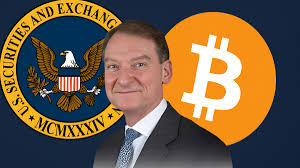
For years, the conversation around cryptocurrency in the United States has been dominated by two words: “regulation” and “when.” It’s been a swirling mix of speculation, enforcement actions, and waiting. This week, however, that familiar soundtrack got a major new beat. Gary Gensler, the Chairman of the Securities and Exchange Commission (SEC), signaled that comprehensive U.S. cryptocurrency legislation is no longer a distant concept on the horizon. According to his recent statements, it’s now approaching finalization.
This isn’t just another bureaucratic update. Frankly, it’s a potential watershed moment for investors, developers, and the entire financial landscape. The era of operating in a gray area is closing. Let’s unpack what this means, why the timing is critical, and how the impending regulatory framework could reshape your interaction with digital assets.
Understanding the SEC’s Crucial Role in Crypto Regulation
First, it’s essential to grasp why the SEC is at the center of this storm. The SEC’s core mission is to protect investors, maintain fair markets, and facilitate capital formation. Its primary tool for doing this is determining what constitutes a “security.” If an asset is a security, it falls under a strict regime of registration, disclosure, and oversight.
The central, multi-billion dollar question in crypto has been: which digital assets are securities? The SEC, under Gensler, has consistently argued that many cryptocurrencies, particularly those involved in initial coin offerings (ICOs) or those where investors expect profits from the efforts of others, are indeed securities. This perspective has led to numerous high-profile enforcement actions as the agency seeks to apply existing, decades-old securities laws to this new technology.
However, applying old rules to a fundamentally new asset class has created immense confusion and friction. Many in the industry have clamored for new, tailored legislation from Congress to provide clear rules of the road. Gensler’s latest comments suggest that this legislative clarity is now materializing. You can read the Chairman’s full remarks on the SEC’s official website where he outlined his current thinking on crypto markets.
Why Clear Crypto Rules Are a Game-Changer for Everyone
Transitioning from regulatory ambiguity to a defined framework matters profoundly. For mainstream investors, clear rules mean better consumer protections. They would know what disclosures to expect, what risks are being mitigated, and have clearer paths for recourse if something goes wrong. This legitimacy could unlock a wave of institutional investment that has been sitting on the sidelines, wary of the legal uncertainty.
Simultaneously, for crypto companies and developers, a finalized legislative package provides the stability needed to innovate responsibly. Instead of fearing a sudden enforcement action over an ambiguous rule, businesses can build with confidence, knowing the compliance parameters. This could accelerate the development of useful blockchain applications in finance, supply chain, and beyond. According to a Congressional Research Service report, the lack of clarity has been a significant barrier to innovation and consumer adoption in the United States.
Moreover, this move is about global competitiveness. Other jurisdictions, like the European Union with its MiCA framework and the UK with its advancing cryptoasset regime, are moving decisively. The U.S. risks losing its financial and technological edge if it doesn’t provide a coherent environment for this industry to thrive domestically. Finalizing workable legislation is a step to reclaiming leadership.
Key Pillars the Final Crypto Legislation Must Address
While the exact details of the approaching legislation are still under wraps, based on Congressional discussions and the SEC’s stated priorities, we can anticipate several critical components. These pillars will likely form the backbone of the new regulatory framework for digital assets.
Investor Protection and Disclosure Requirements will be paramount. Expect mandates for clear, plain-language disclosures about a project’s operations, risks, financials, and the rights attached to a token. This directly addresses the “wild west” perception that has plagued the space.
Market Structure and Exchange Oversight is another inevitable focus. Legislation will likely define the requirements for platforms that trade crypto assets, ensuring they have robust safeguards against manipulation, proper custody solutions for customer funds, and clear separation of functions. The goal is to prevent another FTX-scale collapse.
Furthermore, the bill must tackle the Classification of Digital Assets. It may create new definitions or clarify the path for a token to be deemed a commodity, a security, or something else entirely. This clarity is the single most important thing the industry has requested for years.
Navigating the Path Ahead for Crypto Markets
So, where do we go from this announcement? The process is not yet complete. Gensler’s statement indicates that legislation is nearing finalization, but it must still wind its way through Congress. This means debate, potential amendments, and ultimately, a vote. The political landscape ensures this will be a complex journey.
However, the mere fact that the head of the SEC is publicly stating that legislation is in its final stages is a powerful signal. It suggests a consensus is forming between regulators and lawmakers on Capitol Hill. The intense activity in congressional committees over the past two years is now crystallizing into tangible text.
For you, as someone interested in this space, the imperative is to stay informed and engaged. The final shape of these rules will directly impact how you buy, sell, hold, and use cryptocurrencies. It will determine which projects flourish under the new regime and which struggle to adapt. Following reputable sources for analysis on these developments is crucial.
Preparing Your Portfolio for a Regulated Future
With regulatory waves approaching, a proactive mindset is your best tool. Consider diversifying your exposure, focusing on projects with strong fundamentals, transparent teams, and a clear utility beyond pure speculation. These are the projects most likely to not just survive but thrive in a regulated environment.
Additionally, prioritize using platforms that are already investing heavily in compliance. Exchanges that are proactively engaging with regulators, seeking licenses, and implementing strong KYC/AML procedures are positioning themselves for the long haul. Their commitment to playing by the rules, even before they are fully written, is a positive indicator.
Finally, embrace the educational aspect. Understand the principles of securities law, the importance of disclosures, and the hallmarks of a sound investment. A regulated market rewards educated participants. Resources like Investopedia’s guide to blockchain basics can help build that foundational knowledge.
The Final Countdown for Crypto Legislation Begins
In conclusion, Gary Gensler’s announcement is more than just regulatory news. It’s the starting gun for the final lap of a long race toward legal clarity for cryptocurrencies in America. The approaching finalization of U.S. cryptocurrency legislation represents a historic pivot from ambiguity to structure.
This transition won’t be without its challenges. Some will argue the rules are too strict, while others will claim they’re too lenient. Yet, the overwhelming benefit is the creation of a known environment. That environment fosters protection for the average person, allows builders to create without looking over their shoulder, and ensures the United States remains a central player in the future of finance. The finish line for crypto regulation is finally in sight, and its crossing will mark the true beginning of a new, more mature chapter for digital assets.
Sources:
- SEC Chairman Gary Gensler’s Statements on Crypto Markets
- Congressional Research Service: “Cryptocurrency: The Economics of Money and Selected Policy Issues”
- European Union’s Markets in Crypto-Assets (MiCA) Regulation
- Investopedia: Blockchain and Cryptocurrency Basics
- Library of Congress: Regulation of Cryptocurrency Around the World