
















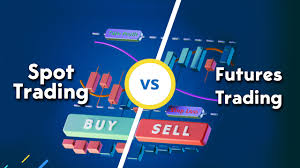
Imagine you’re at a bustling farmer’s market. You see a vendor with beautiful, ripe avocados. You pay cash, hand over a few dollars, and walk away with your avocado, ready to make guacamole that afternoon. This is the essence of spot trading.
Now, imagine a different scenario. It’s January, but you’re a restaurant owner planning your menu for June. You’re worried avocado prices might skyrocket by summer. So, you strike a deal with a farmer today: you agree on a price and promise to buy 100 pounds of avocados in June. No avocados change hands now, just a contract for future delivery. This is the core of futures trading.
In the financial world, this marketplace isn’t for avocados but for currencies, stocks, commodities like oil and gold, and cryptocurrencies. The choice between trading on the spot or venturing into futures is one of the most fundamental decisions a trader or investor can make. It shapes your strategy, defines your risks, and determines the rhythm of your engagement with the markets.
Let’s walk through this crossroads together, understanding not just the mechanics, but the real-world implications of each path.
The Here and Now: Understanding Spot Trading and the Trader’s Crossroads
Spot trading is the financial world’s version of that immediate market exchange. When you engage in a spot trade, you are buying or selling an asset right now, at its current market price, for immediate settlement and delivery.
The “spot price” is the live, ticking heartbeat of any market. It’s the number you see flashing on screens for a stock, the exchange rate for a currency pair, or the current cost of one Bitcoin. Settlement—the actual exchange of the asset for cash—typically happens within a short timeframe, often one or two business days (referred to as T+1 or T+2).
Key Characteristics of Spot Markets:
- Ownership: You physically (or electronically) own the asset. You buy Apple stock on the spot? You own a slice of Apple. You buy Ethereum? It goes into your wallet.
- Simplicity: The concept is straightforward: buy low, sell high. You profit from the difference between your purchase price and your selling price.
- Direct Exposure: Your profit or loss is directly tied to the price movement of the asset itself. If it goes up 10%, your position gains 10% (minus fees).
This market is where most investors begin. It’s where long-term “buy and hold” strategies live, and where day traders try to capture small, rapid movements. The primary goal is straightforward: capital appreciation.
However, spot trading has its limits. Your potential profit is capped at 100% of your investment if the asset goes to zero (a catastrophic loss), but the upside, while theoretically unlimited, requires the full capital outlay. To control $10,000 of gold, you need to put up $10,000.
The Future is a Contract: Demystifying Futures Trading
Futures trading, in contrast, is a world of agreements and anticipation. A futures contract is a standardized legal agreement to buy or sell a specific asset at a predetermined price at a specified time in the future. These contracts trade on regulated exchanges like the CME Group (Chicago Mercantile Exchange).
Crucially, when you trade a futures contract, you are generally not interested in taking delivery of 1,000 barrels of crude oil or 5,000 bushels of wheat. Instead, you are speculating on the direction of the future price of that asset. Before the contract expires, most traders will close their position by taking an opposite trade, settling the difference in cash.
The real game-changer here is leverage.
The Power and Peril of Leverage:
Exchanges require only a fraction of the contract’s total value as a good-faith deposit, known as margin. This margin might be just 3-10% of the contract’s notional value. Consequently, you can control a large amount of an asset with a relatively small amount of capital.
For example, if one Micro E-mini S&P 500 futures contract controls roughly $20,000 of the index, the initial margin might be just $1,000. A 5% move in the index becomes a 100% move on your margin capital. This magnifies both gains and losses, making risk management non-negotiable.
Key Roles of Futures Markets:
- Hedging: This is the original purpose. A wheat farmer can lock in a sale price months before harvest, hedging against a price drop. An airline can lock in future fuel costs, hedging against a price surge.
- Speculation: Traders provide the market liquidity that hedgers need, attempting to profit from price predictions without ever intending to take delivery.
- Price Discovery: Futures markets are a forward-looking consensus on where prices are headed, incorporating all known information and expectations about the future.
Side-by-Side: The Core Differences That Define Your Trade
To see the distinction clearly, let’s lay them out side by side.
| Feature | Spot Trading | Futures Trading |
|---|---|---|
| Transaction Nature | Immediate exchange of asset for cash. | Agreement for a future exchange at a price set today. |
| Settlement | Almost immediate (T+0 to T+2). | On a predetermined future date (expiry). |
| Ownership | Direct ownership of the underlying asset. | Ownership of a contract, not typically the asset. |
| Capital Required | Full value of the asset (or full position size). | Only a margin fraction (e.g., 3-15%) of the contract value. |
| Primary Use Case | Direct investment, long-term holding, simple speculation. | Hedging, leveraged speculation, arbitrage. |
| Market Influence | Reflects current supply and demand. | Reflects future expectations of supply and demand. |
| Complexity | Generally simpler, more accessible. | More complex, involving contract specs, expiry, rollover. |
The Strategic Implications: Where Each Market Excels
Your choice isn’t just about mechanics; it’s about aligning the tool with your goal.
When Spot Trading Shines:
- For the Long-Term Investor: If you believe in the decade-long potential of a company or the enduring value of gold, buying and holding the spot asset is the classic, straightforward path. You can collect dividends (for stocks) or earn staking rewards (for some cryptocurrencies).
- For Direct Utility: If you need a foreign currency for a trip or want to actually use cryptocurrency in a decentralized application, the spot market is your only route.
- For Simplicity and Control: You own what you buy. There’s no expiry date looming, no leverage blowing up your account if you miscalculate. The risk, while still present, is more contained to your initial investment.
When Futures Trading Becomes Essential:
- For Risk Management (Hedging): This is invaluable for businesses. As noted by Investopedia, a hedge is an investment made to reduce the risk of adverse price movements. A portfolio manager holding a large stock portfolio might sell stock index futures to protect against a market downturn.
- For Leveraged Speculation: With proper risk controls like stop-loss orders, experienced traders can capitalize on smaller price movements with greater capital efficiency. This allows for strategies that would be impossible or inefficient in spot markets.
- For Market Neutrality: Futures make it easy to profit from a decline in price (going short) as easily as from an increase. While short selling exists in spot markets, it is often more cumbersome and comes with different costs.
- For Access and Efficiency: Futures offer a clean, regulated way to gain exposure to entire asset classes—like stock indices, interest rates, or volatile commodities—without having to manage all the underlying components.
Navigating the Risks: A Candid Look at the Downsides
Neither path is without its pitfalls.
Spot Trading Risks:
- Limited Capital Efficiency: Your capital is tied up in the full position, limiting your ability to diversify.
- One-Way Street: While you can short sell in many spot markets, it’s often less straightforward and more expensive than going short in futures.
- Carrying Costs: Holding physical commodities (like gold) incurs storage and insurance costs. Holding some financial assets may involve financing costs.
Futures Trading Risks:
- Leverage is a Double-Edged Sword: This is the paramount risk. A small move against your position can lead to losses exceeding your initial margin, triggering a margin call where you must deposit more funds immediately or be forced to close at a loss. The Commodity Futures Trading Commission (CFTC) consistently warns traders about the risks of leverage.
- Complexity and the Expiry Clock: Futures contracts have expiry dates. If you wish to maintain your position, you must “roll over” to a further-dated contract, which can incur costs and requires active management.
- Gapping Risk: Prices can jump between sessions (overnight or over weekends), potentially blowing past your stop-loss orders and causing worse-than-expected losses.
Finding Your Footing in the Markets
So, how do you choose? Consider these questions:
- What is your primary objective? Are you investing for the long term, or actively speculating on short-term price movements?
- What is your risk tolerance? Can you stomach the violent swings and potential for rapid loss that leverage brings? Be brutally honest.
- What is your experience level? Spot markets offer a gentler introduction to the feel of price action. Futures demand a steeper learning curve and disciplined risk management from day one.
- How much time can you commit? A long-term spot portfolio can be monitored periodically. An active futures position, especially with leverage, often requires closer, more vigilant attention.
For many, the journey starts in the spot markets, building an understanding of asset behavior. As knowledge and confidence grow, they might then allocate a portion of their capital to futures for specific strategies—like hedging an existing portfolio or making a targeted, leveraged bet on a market view they have high conviction in.
The Final Verdict: Complementary Forces, Not Rivals
Ultimately, spot and futures markets are not adversaries; they are two interdependent engines of the global financial system. The spot market reflects the present reality, while the futures market reflects the collective wisdom about the future. Together, they provide liquidity, facilitate price discovery, and offer a spectrum of tools for different participants.
The farmer at the market, the restaurant owner planning ahead, the long-term investor, and the active speculator—they all have a place. Your task is to understand the tools so deeply that you know instinctively which one to pick up for the job at hand. Start with clear goals, respect the risks—especially the profound power of leverage—and never stop learning. The market is a relentless teacher, but for the prepared, it offers a world of opportunity.
Sources & Further Reading:
- Investopedia: Spot Market
- CME Group: What are Futures?
- U.S. Securities and Exchange Commission (SEC): Margin: Borrowing Money to Pay for Stocks
- The Balance: The Difference Between Spot Prices and Futures Prices