















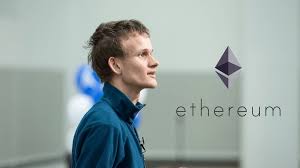
When Vitalik Buterin talks about Ethereum, he rarely frames it as just a blockchain or a financial network. Instead, he consistently returns to a much larger idea. Ethereum, in his view, is meant to become a world computer that functions as shared internet infrastructure. That vision, which once sounded abstract, is now being shaped by very real technical progress. In 2025, Ethereum increased gas limits, expanded blob capacity, improved node software reliability, and reached major zkEVM performance milestones. Step by step, the network is moving closer to being usable at global scale without giving up decentralization.
At the same time, the mission has not changed. Ethereum is still trying to do something the internet itself never fully solved: provide a neutral, permissionless base layer where applications can run without gatekeepers, single points of failure, or hidden rules. What has changed is that the tools to get there are finally mature enough to be tested in the real world.
Ethereum’s original idea as shared infrastructure
From the beginning, Ethereum was described as a general-purpose blockchain. However, Buterin has often emphasized that this phrase undersells the ambition. The goal was never just smart contracts for finance. Instead, Ethereum was designed to act like a global settlement and computation layer, similar to how TCP/IP works for data transfer on the internet.
Because of that, Ethereum’s success is not measured only by token prices or transaction counts. It is measured by whether developers can build applications that are open, resilient, and difficult to censor. Over time, this framing has pushed Ethereum toward infrastructure thinking rather than product thinking. In other words, Ethereum is not trying to win users directly. It is trying to serve developers and applications that then serve users.
For background on Ethereum’s early philosophy, you can explore this overview of its origins and design goals: https://ethereum.org/en/what-is-ethereum/
2025 as a turning point for scalability
For several years, Ethereum faced a constant criticism. It worked, but it did not scale well enough for mass use. High fees and limited throughput made everyday applications difficult. In response, the community chose a rollup-centric roadmap, where Layer 2 networks handle most execution while Ethereum focuses on security and data availability.
In 2025, that roadmap began to show clear results. Gas limits on Ethereum mainnet increased, allowing more computation per block without sacrificing stability. At the same time, blob counts expanded, meaning rollups could post more data more cheaply. These changes directly improved the user experience on Layer 2 networks, where fees continued to fall and throughput continued to rise.
Rather than chasing raw speed at the base layer, Ethereum focused on predictable, sustainable scaling. That approach aligns with Buterin’s long-standing belief that blockchains should scale in layers, not by pushing everything onto a single chain.
zkEVM progress and what it really enables
Zero-knowledge technology has been part of Ethereum’s research roadmap for years. However, zkEVMs, which allow Ethereum-compatible computation to be proven succinctly, were once considered too slow or too complex for practical use. That changed significantly in 2025.
Several zkEVM implementations reached performance levels that made them competitive with optimistic rollups. Proof generation times dropped, hardware requirements became more reasonable, and tooling improved for developers. As a result, zk-based Layer 2s moved from experimental to production-ready.
This matters because zkEVMs strengthen Ethereum’s core promise. They allow massive scaling while preserving security guarantees inherited from Ethereum itself. Moreover, they enable faster finality and simpler bridging, which reduces user risk.
Vitalik has repeatedly highlighted zkEVMs as one of the most important long-term technologies for Ethereum. A detailed explanation of his thinking can be found here: https://vitalik.eth.limo/general/2022/08/04/zkevm.html
PeerDAS and the future of data availability
Scaling computation is only half the challenge. Data availability, ensuring that transaction data is accessible to anyone who wants to verify the chain, is equally critical. In 2025, Ethereum continued advancing toward PeerDAS, or peer-to-peer data availability sampling.
PeerDAS allows nodes to verify that data is available without downloading all of it. This significantly reduces the burden on individual node operators. As a result, more people can run nodes on consumer hardware, which directly supports decentralization.
By combining blob-based data availability with PeerDAS, Ethereum is preparing for a future where thousands of rollups can coexist without overwhelming the network. This design choice reinforces Ethereum’s role as infrastructure rather than a single monolithic system.
For a technical overview of data availability sampling on Ethereum, see: https://ethereum.org/en/roadmap/danksharding/
Improving node software and operational quality
Scaling is meaningless if only a few actors can participate. Recognizing this, Ethereum developers in 2025 placed strong emphasis on node software quality. Clients became more stable, sync times improved, and resource usage became more predictable.
These improvements may not generate headlines, but they are essential. A world computer cannot depend on a small group of professional operators. It must be accessible to hobbyists, researchers, and independent developers around the world.
Better node software also strengthens Ethereum’s social layer. When more people can independently verify the chain, trust becomes distributed rather than concentrated. This aligns closely with Buterin’s view that decentralization is as much a social property as a technical one.
Decentralization beyond the base layer
One of the most important themes in Vitalik’s recent writing is that decentralization does not stop at Layer 1. Even if Ethereum itself is decentralized, applications built on top of it can easily reintroduce central points of control.
In response, the ecosystem has begun focusing more seriously on application-layer decentralization. This includes decentralized frontends, censorship-resistant RPC infrastructure, and trust-minimized governance models. While progress is uneven, the direction is clear.
Ethereum’s mission as world computer requires that users can interact with applications without relying on centralized intermediaries. Otherwise, the base layer’s decentralization loses much of its value.
An accessible discussion of application-layer decentralization challenges can be found here: https://ethereum.org/en/developers/docs/web2-vs-web3/
Large-scale usability as the remaining hurdle
Even with technical breakthroughs, usability remains Ethereum’s biggest challenge. Wallet UX, key management, and cross-chain complexity still confuse many users. Vitalik has acknowledged this openly, arguing that mainstream adoption depends on making self-custody and onchain interaction feel safe and intuitive.
Account abstraction, smart wallets, and better standards are gradually addressing these issues. In 2025, more applications adopted gas abstraction and social recovery, reducing friction for new users. While the experience is not yet seamless, the progress is real.
Importantly, Ethereum’s approach to usability does not sacrifice user sovereignty. Instead of hiding complexity behind centralized services, the goal is to design systems that remain decentralized while feeling approachable.
Ethereum as neutral global infrastructure
At the heart of all these developments is a single idea. Ethereum is not trying to replace governments, banks, or companies. It is trying to provide a neutral base layer that anyone can build on. In that sense, it resembles the early internet more than a traditional platform.
Vitalik often compares Ethereum’s role to that of open standards. No one owns them, yet everyone benefits from them. By increasing capacity, improving verification, and strengthening decentralization, Ethereum moves closer to fulfilling that role.
This framing also explains why progress can feel slow. Infrastructure evolves cautiously because mistakes are costly. Ethereum’s deliberate pace reflects an understanding that reliability and neutrality matter more than short-term growth.
Looking ahead with realism and optimism
Ethereum’s journey toward becoming a world computer is far from complete. Challenges remain in governance, usability, and coordination across a rapidly growing ecosystem. Yet, the progress made in 2025 suggests that the foundational pieces are falling into place.
Gas limit increases, blob expansion, zkEVM maturity, and PeerDAS research all point in the same direction. Ethereum is becoming more scalable without compromising its core values. At the same time, improved node software and application-layer awareness show a deeper understanding of decentralization as a system-wide property.
For readers interested in Ethereum’s broader evolution, you may also find this internal resource useful: https://yourwebsite.com/ethereum-roadmap-overview
Closing perspective
Vitalik Buterin’s vision of Ethereum as the world computer is no longer just philosophical. It is increasingly reflected in concrete engineering decisions and measurable outcomes. While the path is complex, the direction is consistent. Ethereum is positioning itself as durable, open internet infrastructure for a digital world that demands trust without permission.
As this transformation continues, the most important metric may not be speed or cost alone. Instead, it will be whether Ethereum remains something anyone can use, verify, and build on. If it succeeds, the idea of a world computer may finally move from theory into everyday reality.
Sources:
Ethereum Foundation, official documentation: https://ethereum.org
Vitalik Buterin, zkEVM discussion: https://vitalik.eth.limo/general/2022/08/04/zkevm.html
Ethereum roadmap and danksharding overview: https://ethereum.org/en/roadmap/danksharding/