



















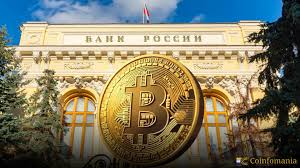
In a rare and notable shift from its historically cautious stance on digital assets, the Central Bank of Russia has acknowledged that Bitcoin mining is contributing to the stability of the ruble—the nation’s official currency. For years, Russian monetary authorities resisted open recognition of cryptocurrencies, citing financial stability risks and regulatory concerns. However, recent statements by central bank leadership reflect a recalibration of perspective, increasingly seeing Bitcoin mining as a meaningful factor in the broader economic landscape. (KuCoin)
But beyond the headlines, this development has broader implications for how digital assets and national monetary policy can interact, even in heavily regulated and sanction-pressured economies.
A Shift in Tone from Skepticism to Pragmatism
Historically, Russian officials—including the Central Bank—expressed deep skepticism about digital assets. Critics warned that cryptocurrencies posed systemic risks and potential threats to domestic financial markets. That firm stance often mirrored global concerns about unregulated crypto activity undermining monetary sovereignty. (Wikipedia)
Today, however, the narrative is beginning to evolve. Governor Elvira Nabiullina publicly stated that Bitcoin mining has become “an additional factor supporting the ruble’s exchange rate.” While she was careful to note the difficulty in quantifying its exact impact due to a large portion of mining still operating outside formal reporting channels, her acknowledgement marks a clear departure from earlier rhetoric. (Bitbo)
Although not dramatic, this pivot is significant: it signifies that digital asset activity—once viewed primarily through the lens of risk—is now being evaluated for its economic utility.
Understanding Bitcoin Mining in the Russian Context
Bitcoin mining refers to the process of validating transactions and securing the Bitcoin network, in return for newly minted tokens. Large-scale mining requires significant energy and specialized hardware, which makes regions with lower electricity costs and cooler climates attractive. These conditions exist in parts of Russia, especially in Siberia and other northern territories.
For years, mining operated in a legal gray zone, neither fully regulated nor prohibited, attracting investment and driving operational growth. This informal expansion meant that miners could sell Bitcoin internationally, converting energy and computing power into digital assets that could be traded for hard currency. (Bitbo)
In August 2024, Russia enacted legislation that formally legalized Bitcoin mining, requiring operators to register and comply with business regulations. Even so, illegal mining and energy theft persisted in energy-constrained regions, prompting further enforcement efforts by authorities. (KuCoin)
How Mining Activity May Support the Ruble
At first glance, Bitcoin mining and a national currency’s stability might appear unrelated. However, Russia’s unique economic circumstances help explain the connection.
Many analysts observe that mining generates foreign currency inflows. This occurs because miners typically sell mined Bitcoin outside Russia in exchange for USD, euros, or other convertible currencies. That foreign currency can then be repatriated to Russia, providing inflows that help offset capital flight and external pressures—particularly useful under Western sanctions and capital controls. (AInvest)
In this way, mining contributes to foreign exchange dynamics, albeit indirectly. When foreign currency enters Russia’s financial system, it can support the ruble by strengthening demand for the national currency and easing balance-of-payments pressures.
Maxim Oreshkin, a senior presidential aide, has explicitly framed Bitcoin mining as a “new form of export,” pointing to its potential as a non-traditional revenue stream that generates economic value. (Bitbo)
Why This Recognition Is Significant
Several converging factors make this acknowledgement an important milestone.
Sanctions and Capital Constraints
Russia’s economy remains under significant pressure from Western sanctions, which restrict access to traditional markets and financial systems. Under these conditions, finding alternatives to mitigate economic isolation becomes a priority. Bitcoin mining—and more broadly, digital asset activity—operates outside conventional banking systems, making it inherently resistant to some sanctions. Recognizing this dynamic allows policymakers to consider non-traditional mechanisms to generate revenue and support currency stability.
Legal and Regulatory Evolution
For many years, Russia’s approach to cryptocurrencies vacillated between blanket caution and partial acceptance. Regulatory frameworks were slow to evolve while policymakers debated how to integrate digital assets without creating systemic risks. The shift toward accepting Bitcoin mining as an economic contributor suggests that Russian authorities are increasingly open to pragmatic integration rather than outright prohibition. (KuCoin)
Macro-Economic Policy Considerations
Monetary policy typically focuses on traditional levers—interest rates, reserve requirements, capital controls, and currency interventions. Bitcoin mining adds an unconventional source of inflows that policymakers can consider, especially when other levers offer limited relief under external constraints.
Although mining’s impact on the ruble remains difficult to quantify precisely, its acknowledgment at the highest level of monetary authority signals that digital asset flows are now part of macroeconomic discussions.
Ongoing Challenges and Caveats
While the central bank’s acceptance marks progress, significant challenges remain.
Regulatory Transparency
A large portion of mining in Russia still operates outside transparent and formal reporting channels. This makes accurate measurement difficult and complicates the central bank’s ability to incorporate mining into official economic analysis. (MEXC)
Bringing these activities fully into the formal economy requires further regulatory clarity, enforcement of existing laws, and improvements in economic data collection.
Domestic Use Restrictions
Despite mining’s recognition, Russia has explicitly ruled out allowing Bitcoin or other cryptocurrencies as legal mediums of domestic payment. Lawmakers have reaffirmed that ruble-only transactions remain mandatory for all domestic economic activity. (LBank)
This underscores the continued commitment to preserving monetary sovereignty and preventing crypto from displacing the ruble in everyday commerce.
Financial Stability Risks
The central bank remains cautious about broader crypto adoption due to long-standing concerns about financial risks, including volatility, fraud, and systemic disruption. Therefore, Bitcoin mining may be acknowledged as a supportive factor, but it is not being elevated to a core pillar of monetary policy.
What This Means for Russia’s Economic Strategy
Russia’s economy is navigating a period of transition. Reduced access to conventional financial and trade systems has forced policymakers to explore alternative channels to maintain economic resilience.
In this context, acknowledging Bitcoin mining’s contribution to ruble stability reflects a strategic flexibility that could influence future policy in several ways:
Balancing Innovation with Control
Authorities are balancing the potential economic benefits of digital asset activity with the need to maintain oversight and prevent illicit behavior. This balancing act will likely lead to new frameworks that both support innovation and enforce compliance.
Potential Integration with Trade and Finance
Over time, ongoing discussions between the central bank, finance ministry, and anti-money-laundering authorities may lead to broader integration of digital assets into the financial system, perhaps through regulated exchanges or licensed institutional participation. (MEXC)
Monitoring and Measurement Improvements
Acknowledging mining’s impact could spur improvements in economic data collection related to crypto activity, enabling more accurate analysis of balance-of-payments dynamics and currency flows.
Broader Implications for the Crypto Ecosystem
Russia’s stance resonates beyond its borders. As other countries also face economic headwinds and seek new avenues to diversify economic inflows, the interplay between national currencies and decentralized digital asset activities becomes an evolving topic of interest.
Bitcoin mining’s contribution to national foreign exchange reserves—especially in energy-rich but capital-restricted economies—may encourage other jurisdictions to examine similar dynamics, albeit with tailored regulatory frameworks that suit their specific legal and economic environments.
Conclusion
The Central Bank of Russia’s acknowledgement of Bitcoin mining’s role in supporting the ruble represents a subtle but meaningful evolution in policy. While still cautious, authorities are increasingly recognizing that digital asset flows have real economic implications that cannot be ignored.
From skepticism to conditional acceptance, Russia’s monetary policymakers are incorporating unconventional economic actors—such as Bitcoin mining—into their analytical frameworks, even as legal and regulatory challenges remain.
For observers of global finance and digital assets, this development offers insight into how traditional institutions can adapt to technological change, particularly in the face of geopolitical pressures and evolving economic needs.
Sources Cited Throughout the Article
News Articles and Reports
- “Russian Central Bank Acknowledges Bitcoin Mining’s Role in Ruble Stability,” KuCoin News. (KuCoin)
- “Russia Central Bank Links Bitcoin Mining to Ruble,” Bitbo.io. (Bitbo)
- Report on mining’s broader economic context. (AInvest)
- Analysis on regulatory transparency challenges. (MEXC)
- Coverage on regulatory evolution and future frameworks. (MEXC)
- Russia’s stance on crypto payments restrictions. (LBank)
Background Context
- Cryptocurrency legality and historical regulatory context. (Wikipedia)