











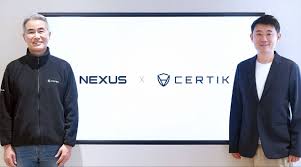
The Asian Web3 landscape is evolving at an impressive pace. At the same time, however, security incidents, regulatory uncertainty, and fragmented infrastructure continue to slow adoption. Against this backdrop, CertiK and NEXUS have signed a Memorandum of Understanding aimed at reinforcing blockchain security and building reliable stablecoin infrastructure across key Asian markets.
Rather than being a symbolic agreement, this MOU outlines concrete areas of collaboration. Specifically, the partnership will focus on smart contract security, on-chain risk monitoring, and the development of regulatory-aligned frameworks for stablecoins in Asia. In addition, both companies intend to cooperate on market entry strategies while expanding joint efforts around Web3 security and enterprise blockchain solutions.
Because Asia represents one of the fastest-growing regions for blockchain adoption, this collaboration signals a strategic step toward safer and more compliant decentralized ecosystems.
Setting the Context: Asia’s Rapid Web3 Expansion
Across Asia, blockchain technology has moved well beyond experimentation. Countries such as Singapore, South Korea, Japan, and Hong Kong have emerged as innovation hubs, while Southeast Asia continues to see grassroots adoption driven by payments, remittances, and decentralized finance.
However, as adoption accelerates, so do the risks. High-profile smart contract exploits and stablecoin depegging events have exposed weaknesses in security practices and governance models. Consequently, regulators across Asia are tightening oversight, demanding greater transparency and stronger risk controls.
It is within this environment that CertiK and NEXUS are aligning their strengths. By combining deep technical security expertise with infrastructure development and regulatory awareness, the partnership aims to address both innovation and protection at the same time.
Who CertiK Is and What It Brings to the Table
CertiK has established itself as one of the most recognizable names in blockchain security. Known globally for its smart contract audits, formal verification tools, and on-chain security intelligence, CertiK supports hundreds of Web3 projects across DeFi, NFTs, and enterprise blockchain deployments.
Beyond audits, CertiK operates real-time monitoring systems that track suspicious activity, protocol risks, and exploit patterns across multiple chains. This proactive approach has become increasingly important as attacks grow more sophisticated.
According to CertiK’s official website, the company’s mission centers on building a safer Web3 world through cutting-edge security research and practical tooling.
Source: https://www.certik.com
Through this MOU, CertiK contributes its security-first mindset, technical expertise, and experience working with regulators and enterprises worldwide.
Understanding NEXUS and Its Role in Infrastructure Development
NEXUS, on the other hand, focuses on blockchain infrastructure and enterprise-grade solutions. While details vary depending on deployment region, NEXUS has consistently positioned itself as a bridge between decentralized technology and real-world business applications.
In Asia, infrastructure providers like NEXUS play a critical role. They help enterprises and financial institutions deploy blockchain systems that are scalable, compliant, and interoperable with existing frameworks.
By partnering with CertiK, NEXUS strengthens its security posture while enhancing trust among regulators, enterprises, and end users.
Source: https://nexus.io
This complementary alignment makes the collaboration particularly relevant for stablecoin development, where both technical resilience and regulatory clarity are non-negotiable.
A Shared Focus on Smart Contract Security
One of the central pillars of the MOU is smart contract security. As DeFi and stablecoin platforms grow more complex, vulnerabilities in contract logic remain a leading cause of losses.
Through this partnership, CertiK’s auditing and verification services will be integrated into NEXUS-supported ecosystems. As a result, projects building on or alongside NEXUS infrastructure can benefit from early-stage audits, continuous monitoring, and post-deployment risk analysis.
Moreover, this approach encourages security to be embedded from the design phase rather than treated as an afterthought. Over time, such practices could significantly reduce exploit frequency across participating networks.
On-Chain Risk Monitoring as a Continuous Safeguard
Static audits alone are no longer enough. Attacks often exploit economic design flaws or governance weaknesses that only emerge under live conditions. Recognizing this reality, the CertiK and NEXUS partnership emphasizes real-time, on-chain risk monitoring.
CertiK’s monitoring tools analyze transaction flows, abnormal contract behavior, and emerging threat patterns. When integrated into NEXUS-supported environments, these tools can provide early warnings to developers, enterprises, and even regulators.
This continuous oversight is especially valuable for stablecoins, where confidence depends on transparency and predictable behavior.
Source: https://www.certik.com/resources
By making risk monitoring a standard feature rather than an optional add-on, the partnership sets a higher baseline for operational security.
Building Regulatory-Aligned Stablecoin Frameworks in Asia
Stablecoins occupy a unique position in the Web3 ecosystem. They promise price stability and utility, yet they also intersect directly with financial regulation. Across Asia, regulators are actively developing rules governing issuance, reserves, disclosures, and operational risk.
Under the MOU, CertiK and NEXUS plan to collaborate on frameworks that align stablecoin infrastructure with regional regulatory expectations. This does not mean sacrificing decentralization entirely. Instead, it involves designing systems that balance innovation with accountability.
For example, audited smart contracts, transparent reserve mechanisms, and real-time monitoring can help stablecoin projects demonstrate compliance without undermining efficiency.
Source: https://www.bis.org/about/bisih/topics/stablecoins.htm
As Asia moves toward clearer regulatory standards, such frameworks may accelerate institutional adoption of stablecoins.
Supporting Market Entry Strategies Across Asia
Another notable aspect of the agreement is the shared focus on market entry strategies. Asia is not a single market but a collection of diverse jurisdictions, each with its own regulatory and cultural nuances.
Through collaboration, CertiK and NEXUS aim to help projects navigate this complexity. Security assurance, regulatory alignment, and infrastructure readiness together form a compelling value proposition for enterprises entering Asian markets.
By pooling insights and regional experience, the partnership reduces friction for Web3 companies seeking expansion while maintaining high operational standards.
Expanding Collaboration in Web3 and Enterprise Blockchain
Beyond stablecoins, the MOU signals broader ambitions. Both companies intend to expand cooperation around Web3 security and enterprise blockchain solutions. This includes use cases such as supply chain tracking, digital identity, tokenized assets, and cross-border settlements.
Enterprise adoption often depends on trust, reliability, and compliance. By combining CertiK’s security credentials with NEXUS’s infrastructure capabilities, the partnership addresses these requirements directly.
Internal initiatives, such as shared research and co-developed tools, could further strengthen the ecosystem. Readers interested in related developments can explore our internal overview of Web3 security trends here: https://example.com/blog/web3-security
Why This Partnership Resonates Now
Timing plays a crucial role in the relevance of this MOU. Regulatory clarity in Asia is improving, institutional interest in blockchain is rising, and security expectations are higher than ever.
By acting now, CertiK and NEXUS position themselves ahead of the curve. Rather than reacting to incidents or regulations after the fact, they are proactively shaping infrastructure that anticipates both risks and requirements.
This forward-looking stance may encourage other industry players to adopt similar collaborative approaches.
Broader Implications for the Asian Web3 Ecosystem
Partnerships like this often have ripple effects. As security and compliance standards rise, weaker projects may struggle to compete. At the same time, stronger foundations can attract more capital, users, and institutional participation.
For developers, the collaboration offers access to better tools and clearer guidelines. For enterprises, it reduces uncertainty. For regulators, it demonstrates that the industry can self-organize around responsible practices.
Over time, such dynamics could help Asia solidify its position as a global leader in blockchain innovation.
A Practical Path Toward Trust
While the MOU itself is only the beginning, its focus areas suggest a practical roadmap. By prioritizing smart contract security, continuous monitoring, and regulatory alignment, CertiK and NEXUS address the most pressing challenges facing Web3 today.
Success will ultimately depend on execution. However, the structure of this partnership indicates a serious commitment rather than a marketing gesture.
For readers tracking developments in blockchain security and stablecoin infrastructure, this collaboration is worth watching closely. Additional insights into enterprise blockchain adoption can be found here: https://www.ibm.com/blockchain
Conclusion
The Memorandum of Understanding between CertiK and NEXUS represents a strategic alignment tailored to the realities of Asia’s Web3 landscape. By combining security expertise with infrastructure development and regulatory awareness, the partnership aims to create safer, more reliable, and more compliant blockchain systems.
As Asia continues to shape the future of decentralized technology, initiatives like this may define how trust, innovation, and regulation coexist.
Sources
https://www.certik.com
https://www.certik.com/resources
https://nexus.io
https://www.bis.org/about/bisih/topics/stablecoins.htm
https://www.ibm.com/blockchain